
Inside a Faja Colombiana: The Engineering Behind the Snatch
Why a real faja can do what regular shapewear can't — broken down by fabric, panel, and stitch. Once you understand how it's built, you'll never go back to spandex shorts.
Strip a Faja Colombiana down to its components and you're looking at three things: powernet, latex panels, and a hook-and-eye closure system. That's it. Three elements engineered to do one thing — sculpt your silhouette from bust to thigh and hold it there for 10+ hours.
The story of why these three elements together produce the result they do is worth understanding, because once you know it, you'll spot fake fajas in 5 seconds and stop overpaying for shapewear that just smooths.
1. Powernet: The Reason It Compresses
Powernet is a high-stretch knit fabric originally developed for the medical industry — specifically for post-surgical compression garments after liposuction, BBL, and tummy tucks.
Unlike spandex (used in Skims, Spanx, and most shapewear), powernet has:
- Higher density — more fibers per square inch, which means more compression per square inch
- 4-way stretch with high recovery — it returns to its original tension after every stretch, instead of getting loose
- Breathability — the open knit pattern lets heat escape, which matters for 10-hour wear
When you put on a faja, the powernet is what creates that snatching sensation in the first 5 seconds. It's the same fabric a plastic surgeon would put on you the day after surgery — except scaled for everyday wear instead of medical recovery.
2. Latex Panels: The Reason It Sculpts
In the highest-compression sections — the abdomen and lower back — quality fajas add internal latex panels. Latex provides the firm, structural compression that physically reshapes the waistline.
Latex panels are why a Faja Colombiana can take 2-3 inches off your waist instantly. The powernet does the smoothing. The latex panels do the sculpting.
Look for fajas that have a soft cotton or polyester inner lining between the latex and your skin — that's what makes 8+ hour wear comfortable. Cheap fajas skip this lining; you'll feel it within an hour.
3. Hook-and-Eye Closure: The Reason It Lasts
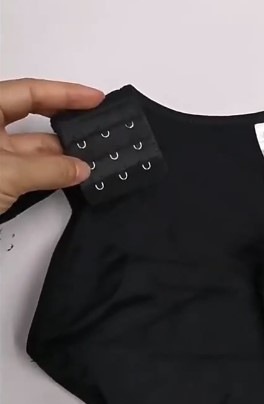
This is the most underrated feature in the entire garment. Three rows of front hooks let you tighten the faja as your body changes:
- Day 1: You start on the loosest row (outermost hooks)
- Weeks 2-4: The fabric stretches in slightly, you move to the middle row
- Months 2-6: Continued wear softens the fabric, you move to the tightest row
- Months 6+: Hand wash, rotate with a second faja, and the garment stays effective for years
Compare this to pull-on shapewear: one size, no adjustment. After three months, the fabric is loose and you're replacing the whole garment. The hook-and-eye system is why a quality Faja Colombiana is the last shapewear purchase you'll need for a long time.
The Other Engineering Details That Matter
Zipper Crotch
Strip away the marketing and the zipper crotch is the most practical feature in the garment. Without it, every bathroom trip requires undressing your entire outfit — and most women just stop wearing the faja by hour three. With it, you can wear a faja all day, every day.
Reinforced Side Seams
High-compression garments fail at the side seams first. Quality fajas use double-stitched or bonded side seams that don't blow out under pressure. Run your finger along the seam — if it feels like a normal T-shirt seam, the garment won't survive 6 months of daily wear.
Built-In Bra (Full Body) vs Open-Bust
The Full Body Faja Colombiana includes structured bra cups stitched into the bust line. The Open-Bust version ends below the bust. Same compression engineering on the body, different bust treatment. (For which to choose, see our comparison guide.)
Butt Lifter Panels
On the rear, quality fajas have specially shaped panels that lift instead of flatten. Regular shapewear compresses everything down, including your rear curves. Faja panels are cut on a curve and stitched with directional tension — the result is that your rear looks lifted and your waist looks smaller in proportion.
How to Spot a Fake Faja
Now that you know what's inside a real one, here's how to spot the imitations sold on Amazon and TikTok shop:
- No hook-and-eye closure (pulls on like spandex shorts) — that's shapewear, not a faja
- Listed as just "polyester + spandex" with no mention of powernet or latex — likely cheap shapewear with a Spanish brand name
- Under $25 — real faja construction can't be priced that low; you're buying shapewear, not a faja
- No zipper crotch — manufacturers cut this corner first to reduce cost
- Comes in standard XS-XXL only — real fajas typically come in S/M, L/XL, 1XL/2XL, 3XL/4XL because the compression range is too high for fine-grained sizing
Why Authentic Construction Costs More (And Why $41.99 Is Already a Steal)
The price difference between fake and real fajas is real but smaller than people assume. Boutique Fajas Colombianas in the US sell for $80-$200 because the markup chain (factory → distributor → boutique → influencer commission) adds 4-6x to the manufacturing cost.
Our Full Body Faja Colombiana uses the same powernet, latex panels, hook-and-eye closure, zipper crotch, and reinforced seams at $41.99 because we sell direct, no middlemen, no influencer commissions baked in.
The Bottom Line
Once you understand the engineering — powernet for compression, latex for sculpting, hook-and-eye for longevity — you can't go back to pull-on shapewear. The technology gap is too obvious. You either own a faja or you own a smoother. Both have a place, but they don't do the same job.
Now you know which one to put on when you actually want to be snatched.