
Will a Faja Help Lower Back Pain? Honest Answer
Half the internet says yes. The other half says it's marketing hype. Here's what's actually true about Fajas Colombianas and lower back pain — what helps, what doesn't, and when to skip it.
Short answer: sometimes yes, sometimes no. And anyone telling you a faja is a guaranteed cure for back pain is selling you something.
That said, there's real science behind why compression garments can ease certain kinds of lower back pain — and equally real situations where wearing one will make pain worse. Here's the honest breakdown.
When a Faja CAN Help
1. Postpartum Lower Back Pain
After childbirth, your abdominal muscles are weakened and stretched. Your lower back compensates by working overtime to keep you upright — that's what creates the deep, dull ache most new moms know intimately.
A medical-grade faja provides temporary external core support, taking some of the load off your lower back muscles while your abdominal wall reactivates. Most physical therapists actually recommend this approach for the first 6-12 weeks postpartum.
For the full postpartum protocol, see our postpartum faja guide.
2. "Long Day on Your Feet" Soreness
If you stand or walk for 8+ hours (retail workers, teachers, nurses, hairstylists), the cumulative load on your lower back compounds throughout the day. A faja's compression panel acts like a flexible lumbar support belt, gently distributing some of that load across your entire core instead of letting it concentrate on the L4-L5 region.
Many women in physically demanding jobs wear a faja specifically for this reason — not for aesthetics.
3. Mild Diastasis Recti
Diastasis recti is the separation of the abdominal muscles, common after pregnancy. Mild cases respond well to targeted physical therapy + temporary compression support. A faja doesn't heal diastasis recti — only exercises do that — but it can reduce the lower back strain that diastasis often causes.
4. Post-Surgical Recovery (With Doctor's Approval)
Fajas were literally invented for post-surgical recovery in Colombia — specifically after liposuction, tummy tucks, and BBL procedures. Surgeons routinely prescribe medical-grade compression to reduce swelling, support the healing abdominal wall, and ease the back pain that's common during recovery.
When a Faja CAN'T Help (or Makes It Worse)
1. Acute Disc Issues (Herniated, Bulging, Sciatica)
If you have an actively herniated disc, sciatic nerve pain, or any sharp/shooting lower back pain, a faja is the wrong tool. You need imaging, a physician evaluation, and likely targeted physical therapy. Compression on an inflamed disc can worsen the inflammation.
2. Chronic Muscle Imbalances
If your back pain comes from chronic weakness in your glutes, hip flexors, or deep core (very common in desk workers), a faja becomes a crutch. It gives temporary relief but lets the underlying muscles stay weak. Long-term, the pain gets worse, not better.
Fix: physical therapy + strengthening + occasional faja wear, not faja wear alone.
3. Active Inflammation, Infection, or Skin Conditions
Any active rash, surgical wound that's not closed, skin infection, or shingles outbreak — skip the faja until your skin is fully healed.
4. Severe Spinal Conditions
Scoliosis (severe), spondylolisthesis, vertebral fractures — these need medical-grade bracing, not a fashion-grade compression garment. Talk to a spine specialist.
What the Research Actually Says
There's no large-scale clinical trial on Fajas Colombianas specifically for back pain. What does exist:
- Lumbar support belts (clinically similar to fajas in form factor) show moderate evidenceof reducing back pain in occupational workers (Cochrane Review, 2022)
- Abdominal compression after C-section is well-documented to reduce postoperative pain and improve mobility (multiple OB/GYN studies)
- Postpartum compression for diastasis recti support is recommended by most pelvic floor physical therapists
The consensus: a faja is helpful as part of a recovery plan, not a standalone cure.
How to Use a Faja Smartly for Back Support
- Wear it during high-load activities — long days on your feet, lifting toddlers, postpartum recovery
- Take it off during low-load times — sitting at home, sleeping, lounging
- Never wear it during workouts that target your core (planks, deadlifts, squats) — your muscles need to engage, not get supported externally
- Pair it with strengthening exercises — even 10 minutes/day of dead bugs, bird dogs, and glute bridges makes a huge difference
- Stop wearing if pain worsens or you feel numbness/tingling — that's a sign something else is going on
Which Faja Is Best for Back Support?
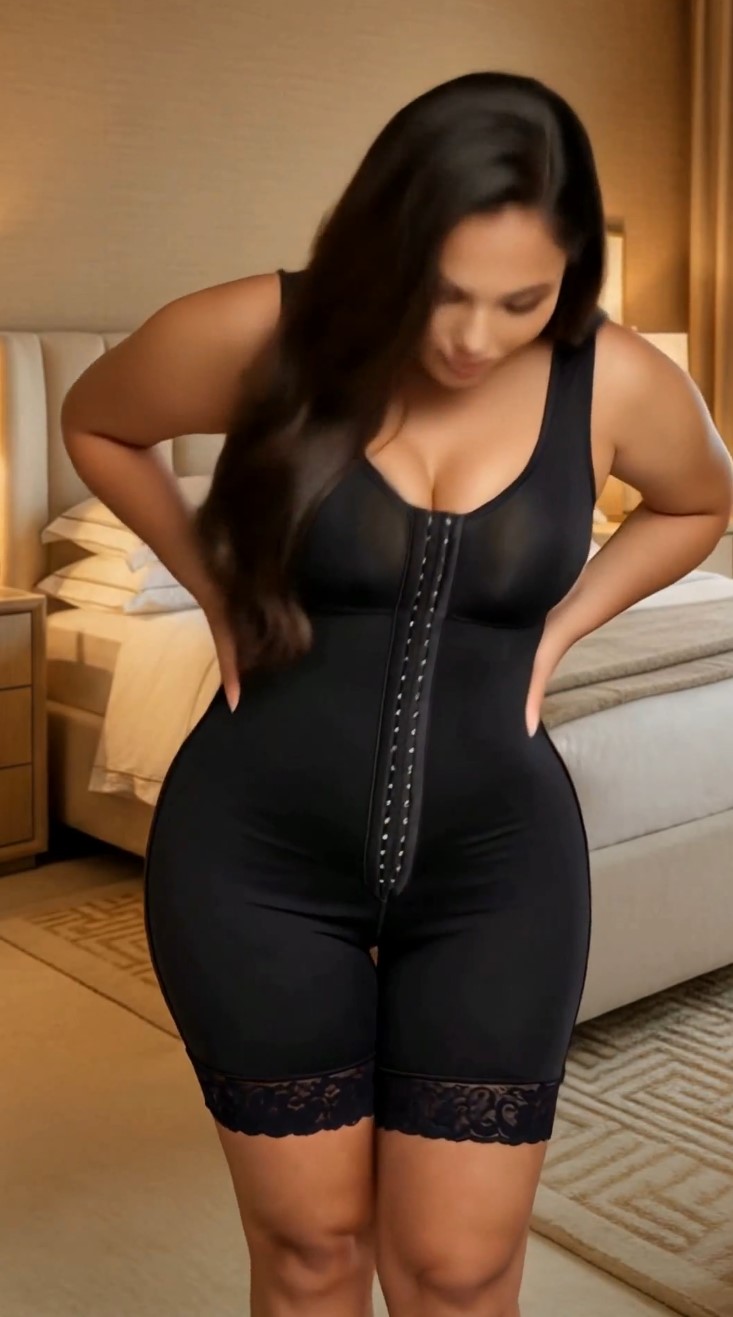
For back support specifically, the Full Body Faja Colombiana ($41.99) is the right answer because it has the largest compression panel covering the lower back. The Open-Bust Faja works too, but the back coverage is slightly smaller because of the upper bust opening.
Either way, the hook-and-eye closure means you can adjust the compression tightness day by day based on how your back feels — tighter on sore days, looser on easy days. That adjustability is exactly why a faja is more practical than a fixed-size back belt.
The Bottom Line
A Faja Colombiana isn't a back pain cure. But for the right kinds of back pain — postpartum, long-day soreness, diastasis support, post-surgical recovery — it's a genuinely useful tool that costs less than two physical therapy sessions and can be worn under your clothes all day.
Pair it with the strengthening work, get your physician's OK if there's anything serious going on, and treat it as one tool in a bigger toolkit. That's how you actually use a faja for back support — without the hype.